August 21, 2026
Alternatives to Familizz for Senior Living Communities
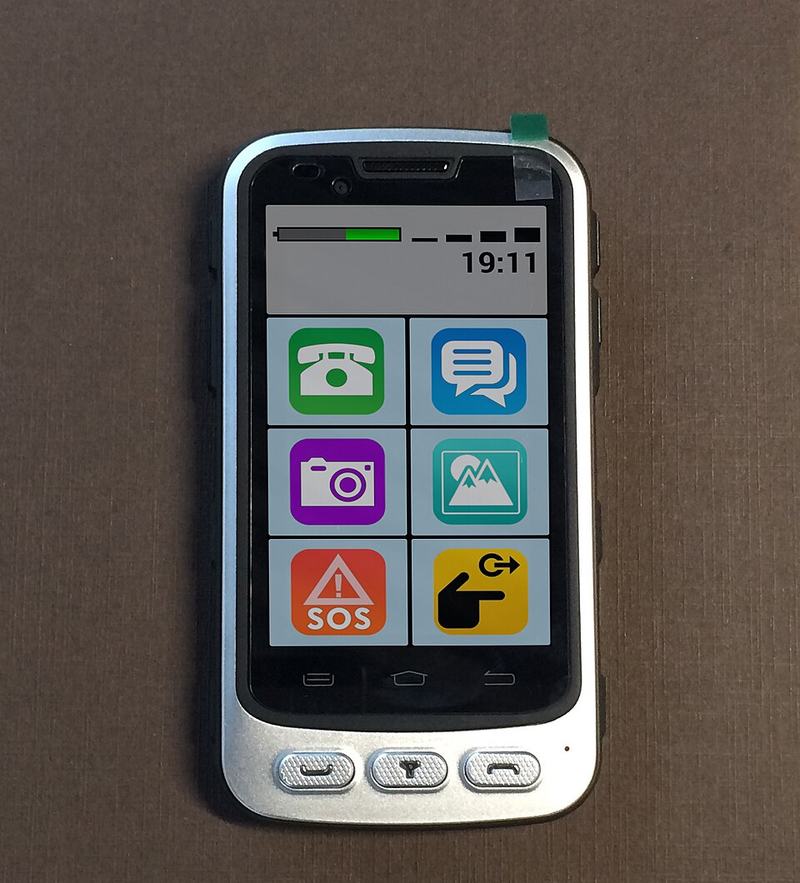
Familizz is another French platform in the senior living communication space, with a business model that — based on its public offering — also includes a marketplace of additional services for residents and families, beyond basic communication. It's, along with Famileo, one of the two best-known European players in the category — we cover the comparison with Famileo separately if that option interests you too.
Why look for alternatives
Not every community needs the same set of features. Some prioritize a simple, fast rollout over a broader ecosystem of services. Others are looking for a solution built specifically for Hispanic and Latin American families, with billing in a familiar currency and no language friction in the staff interface.
What to evaluate when comparing options
- Ease of use for staff — a tool that requires lengthy training rarely gets adopted well.
- Whether communication includes medication and health data, or just photos and general messages.
- How photo and sensitive-data consent is managed per resident.
- Price and billing currency, especially relevant outside Europe.
We don't have specific detail on Familizz's most recent features — this article isn't meant to describe their product in depth, but to help you think through what to evaluate when looking for an alternative. Confirm any specific detail directly with them.
Simplicity as a criterion, not just a preference
A broader service ecosystem isn't always an advantage for every community. The more features a platform includes, the more training time staff needs, and the more likely only a fraction of what's available ends up getting used — with the rest sitting as a value proposition that never fully activates. For small and mid-size communities, with staff who already have little time to spare, a tool focused on nailing the essentials — daily communication, medication, meals — tends to see more real adoption than a more complete but more complex-to-operate platform.
This isn't a judgment against services-marketplace models themselves, which can add real value in the right context — it's an invitation to honestly assess how much of that breadth of features will actually get used, versus how much stays as an attractive feature in a demo but with no sustained use in the community's daily practice.
For a full view of the options available, this comparison puts Famileo, Wappa-Senior, and Palermia side by side in a single table.
Implementation matters as much as features
When comparing alternatives, it's easy to focus only on the feature list and overlook a factor that matters just as much: how long and complex the initial rollout is. A platform with more features usually requires more setup time, more staff training, and in some cases, migrating data from previous systems — all before the community starts seeing the real benefit day to day. Asking concretely how long it takes, in practice, to go from signing the contract to active use by the whole staff is a question just as important as any feature comparison.
It's also worth asking what kind of support is available during those critical first weeks of adoption: whether there's a direct point of contact for questions, whether support is in the same language and time zone as the community, and what happens if the team has questions outside standard business hours. A technically superior tool with slow or foreign-language support can end up causing more frustration than a simpler option with better hand-holding during adoption.
The marketplace model: real benefits and real limits
An ecosystem of additional services within the same platform — from in-home hairstyling to administrative paperwork for the family — can be appealing because it centralizes needs otherwise handled through scattered, variably reliable providers. The real advantage, though, depends on how many of those additional services actually get used in practice: a feature that sounds great in a demo but that no family ends up using doesn't deliver the value it promises, and can even make the platform's overall experience more complicated for those who just want the essentials.
Before treating this kind of ecosystem as a decisive differentiator, it's worth asking what percentage of communities using the platform actually use the marketplace services regularly, instead of assuming that the mere existence of the feature is already a guaranteed benefit for any community that signs up.
Ultimately, looking for an alternative to an already-established tool shouldn't be driven only by curiosity or the urge to try something new, but by a concrete need identified in the community's daily operations. Being clear on that reason from the start helps evaluate any alternative with real judgment, instead of getting swept up by a convincing sales pitch alone.
Taking the time to define that reason well before scheduling demos with different providers saves, in practice, a fair amount of evaluation time — every demo becomes more productive when you arrive with concrete questions about the specific need you're trying to solve, instead of a generic feature review with no clear underlying goal.
The same principle applies to any technology decision at a community, not just choosing a communication tool: starting from a concrete problem, rather than an attractive feature in the abstract, tends to lead to better investment decisions in the long run. It's worth holding onto that same principle even in front of providers with very polished sales presentations, which don't always solve the real need behind the initial search.
Comparing well doesn't mean always choosing the option with the most features — it means choosing the one that best solves, sustainably over time, that particular community's real need.
If your priority is a simple app with medication and meals built in from day one, check out Palermia and its pricing for communities.