August 25, 2026
Anxiety in Old Age: Causes and How to Manage It
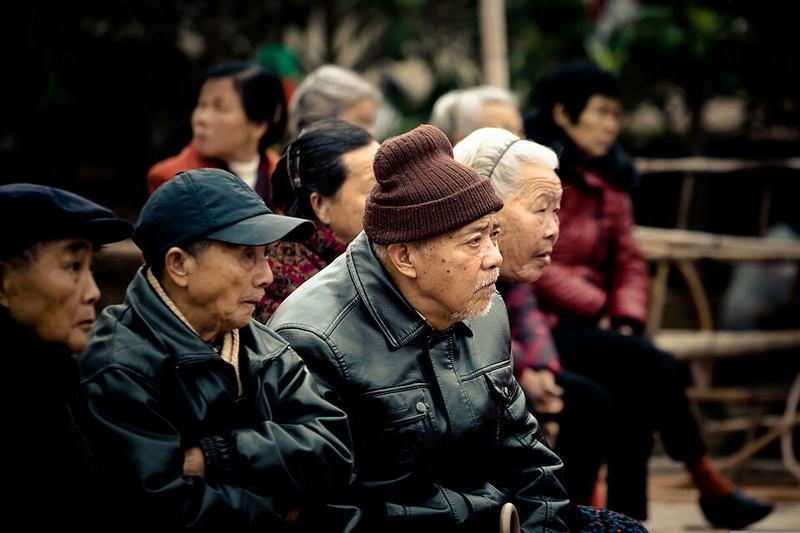
Anxiety isn't exclusive to youth or middle age. In old age it has its own triggers — fear of falling, worry about health, uncertainty about losing autonomy — and can show up even in people who never experienced it before. Unlike other stages of life, where anxiety is often tied to work, finances, or family's future, in older age it tends to concentrate much more on the body itself and the possibility of losing control over one's own daily life.
Common triggers at this stage
- Fear of falling or of another health event, especially after a hospitalization.
- Worry about one's own independence and about 'being a burden' to family.
- Changes in routine or environment, like moving to a senior living community.
- Unresolved grief over the loss of a spouse or close friends.
- Social isolation, which feeds rumination and constant worry.
- Financial worries, especially during periods of high inflation or on a fixed income.
The difference between normal worry and an anxiety disorder
Worrying about a real health problem, or feeling nervous before a surgery, is an expected, proportional response. An anxiety disorder, by contrast, is marked by worry that's disproportionate to the actual risk, that persists even after the situation that triggered it has resolved, and that significantly interferes with daily life. A person with clinical anxiety might keep avoiding going outside months after a fall with no lasting effects, or repeatedly call a family member to confirm they're okay despite no real sign of danger. This distinction matters because the approach differs: normal worry is addressed with information and reassurance, while an anxiety disorder requires specific treatment.
How it shows up, beyond 'being nervous'
Anxiety in older adults doesn't always look like visible restlessness. It can show up as insomnia, muscle tension, digestive complaints, or a constant need for reassurance (calling several times to confirm the same thing, for example). It can also show up as irritability, difficulty making simple decisions, or growing avoidance of situations that never used to be a problem — going outside, getting in a car, being alone for a few hours. Recognizing these patterns as anxiety, rather than just 'quirks' or 'being set in their ways,' is the first step toward actually helping.
The relationship between anxiety and physical health
There's a two-way relationship between anxiety and certain physical health issues in older adults. On one hand, conditions like hyperthyroidism, certain heart problems, or even some medication side effects can produce symptoms identical to an anxiety episode, which makes it important to rule out medical causes before assuming the origin is purely psychological. On the other hand, sustained anxiety over time can worsen the management of chronic conditions like hypertension, creating a feedback loop if it isn't addressed on both fronts at once.
The family's role: unintentionally reinforcing or reducing anxiety
How a family responds to an older adult's anxiety can, without meaning to, feed it. Excessively accommodating every request for reassurance (calling five times a day 'to keep them calm'), or completely avoiding any activity that makes the person nervous, can reinforce the idea that those situations are genuinely dangerous, instead of helping the person learn they can tolerate them. The balance lies in validating the feeling without necessarily giving in to every demand anxiety generates, and gradually supporting the person back into avoided activities, instead of reinforcing avoidance for the comfort of both sides.
What actually helps
Predictable routines reduce uncertainty, which is usually anxiety's fuel. Explaining changes ahead of time (a doctor's visit, a move, a schedule change) instead of letting the person discover them as they happen also helps a lot. Simple breathing techniques, practiced regularly rather than only in a moment of acute distress, can give the person a concrete tool to manage anxiety spikes on their own, which also strengthens their sense of control — especially valuable when much of the anxiety centers precisely on the loss of control.
When to see a professional
When anxiety consistently interferes with sleep, eating, or social life, a professional visit is worth it — there are brief therapies and, if needed, well-tolerated medications for this stage of life, which a doctor can evaluate case by case. It's important that any anxiety medication for an older adult be prescribed and monitored by a professional experienced in geriatrics, since certain anti-anxiety drugs carry a different risk profile (higher risk of falls, confusion) at this age than in younger people.
The role of the physical environment in reducing anxiety
Beyond emotional support, the physical environment also affects an older adult's anxiety level. Tidy spaces, with clear signage, good lighting, and visible routines (a large calendar, written meal and activity schedules) reduce the daily burden of uncertainty — exactly the ground where anxiety thrives. This is one reason a well-designed care environment, with stable routines and staff the person recognizes day to day, can have a calming effect no isolated piece of advice can reproduce on its own.
Simple day-to-day strategies
Beyond professional support when appropriate, there are everyday strategies that reduce the intensity of anxiety without needing formal treatment in milder cases: writing worries down in a notebook to 'get them out of your head,' setting aside a fixed time of day to think about what's worrying you (instead of letting rumination take over the whole day), and practicing repetitive hands-on activities — knitting, gardening, puzzles — that occupy attention in a way that naturally competes with anxious thinking. None of these strategies replace treatment when anxiety is severe, but they can be a useful complement, or a first step while considering a more formal consultation.
Steady, consistent contact also lowers the underlying uncertainty that fuels anxiety — knowing the family is in the loop, without having to ask, is reassuring in itself. See how Palermia keeps families in the loop day to day.