August 14, 2026
Common Medication Mistakes in Older Adults
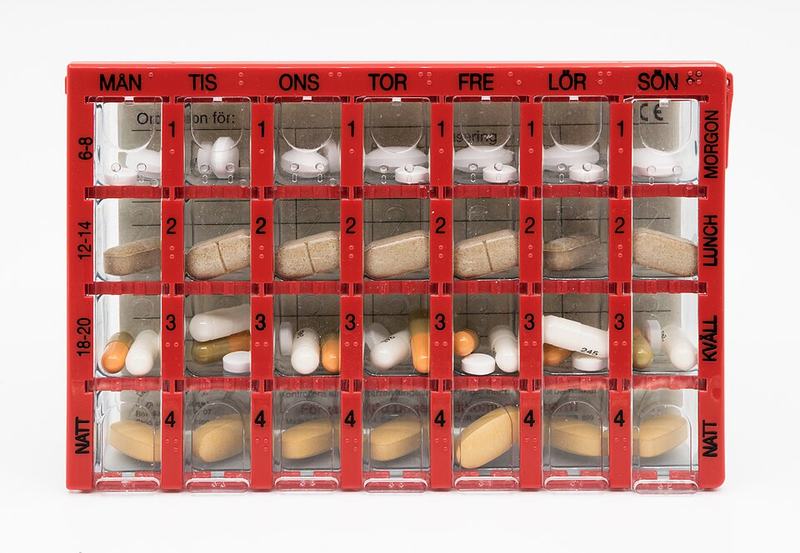
It's common for an older adult to take several medications at once, for different conditions prescribed by different doctors. That complexity multiplies the risk of mistakes — some minor, others with serious consequences, including interactions that can worsen signs of dehydration in older adults.
The most frequent mistakes
- Duplicate doses, when two different doctors unknowingly prescribe similar medications.
- Inconsistent timing, which affects how well certain treatments work.
- Undetected interactions between prescription and over-the-counter drugs.
- Stopping a treatment on your own once you feel better, without checking with the doctor.
Why keeping records matters so much
Keeping a clear log — what was taken, when, who gave it — drastically reduces the margin for error, especially when more than one person is involved in care. At a community, this responsibility falls on nursing staff, who should follow a strict logging protocol for every dose.
This ties directly into how to choose a senior living community: asking specifically how medication is managed should be part of any tour, not a minor detail.
What the family should know
The family doesn't need — and shouldn't necessarily have access to — the full clinical detail of every medication, but they do deserve to know if something happened: a refused, delayed, or missed dose. That level of information, simple but sufficient, is what provides peace of mind without unnecessarily exposing sensitive health data.
Why many older adults don't report side effects
A less-discussed but very common mistake is assuming that if a medication were causing a problem, the person would say so. In practice, many older adults normalize discomfort — dizziness, fatigue, vague aches — as an expected part of 'getting older,' and don't connect it to a recent medication or report it spontaneously to staff or family. This normalization delays catching real adverse effects, some of which are preventable with a simple dose adjustment. Actively and specifically asking — 'have you noticed anything different since you started this medication?' — often surfaces information that would never come up from a general 'how are you feeling' question.
The right to understand your own treatment
Informed consent isn't a one-time formality completed on admission to a community: it's a principle that should be upheld every time a treatment is introduced or changed. To the extent their condition allows it, an older adult has the right to understand what each medication they take is for, what effects to expect, and to voice agreement or concerns — not just receive the pill on schedule with no further explanation. When communication systematically skips this step, even for reasonable operational reasons (little time, many residents), it erodes a basic right over one's own body and treatment.
A related, more delicate issue is the use of sedating medication to make it easier to manage residents with challenging behaviors, instead of addressing the cause of that behavior (untreated pain, confusion, anxiety). This practice, known in geriatric care literature as 'chemical restraint,' is recognized as ethically problematic when used for operational convenience rather than genuine clinical need, and good care practice requires that any medication with a sedating effect have a clear clinical justification, reviewed periodically — not a shortcut for a lack of staff or time.
Polypharmacy: when it's too many medications at once
Polypharmacy is the term for the very common situation, in older adults, of taking five or more medications at the same time, usually for different chronic conditions accumulated over the years. The more medications combined, the higher the risk of undetected interactions, and the higher the chance that a side effect of one medication is being treated with yet another medication, in a chain that's rarely reviewed as a whole once it starts.
Because of this, many geriatric specialists recommend a full, periodic review of all medications — not just adding what's new, but actively evaluating whether anything already being taken is still needed — at least once a year, or after any significant change in health status. This review, known as 'deprescribing' when it results in removing unnecessary medications, is good geriatric medicine practice that often doesn't happen simply because no professional actively takes responsibility for reviewing the full picture, instead of each medication separately.
The value of an always-updated medication list
One of the simplest, and at the same time most underused, tools in caring for older adults is keeping an up-to-date list of every medication the person takes — including over-the-counter drugs, vitamins, and supplements — and bringing it to every medical visit, especially when multiple specialists are involved in their care. Many doctors prescribe based only on what the patient remembers to mention in the moment, which leaves out relevant medications simply because they didn't come to mind during that particular visit. A written list, kept updated by the family or community staff, significantly reduces this risk of omission.
Ultimately, most medication mistakes in older adults aren't due to negligence, but to the lack of a clear system for recording and communicating among everyone involved in care — doctors, family, nursing staff. Solving that coordination problem, more than any single pharmacological advance, is what most reduces real-world risk in everyday practice.
Any family can start today with a simple step: build that complete medication list, review it with the primary care doctor, and agree with the community or primary caregiver on how it will be kept updated going forward.
Palermia logs every dose of medication with full traceability for the nursing team, and shows the family a simple summary: on track, or an issue to flag. See how it works.