August 28, 2026
Occupational Therapy: Real Benefits for Older Adults
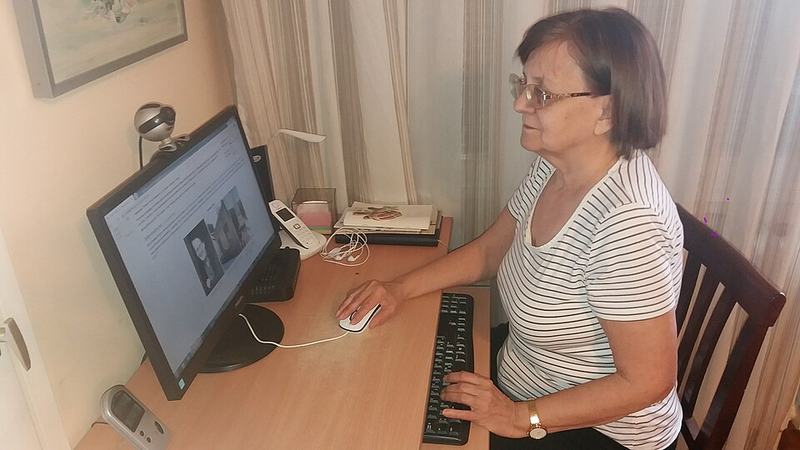
Occupational therapy tends to get oversimplified as 'doing crafts.' In geriatrics, it plays a much more concrete role: helping an older adult keep as much independence as possible in daily activities — getting dressed, eating, bathing, moving around their space — by adapting the environment or the way a task is done when the body no longer responds the way it used to. It's a discipline focused on function and daily life, not abstract diagnoses, which is why its impact tends to show up quickly in the person's real day-to-day.
What it works on, specifically
- Fine motor skills: gripping objects, buttoning clothes, using utensils safely.
- Adapting the environment: railings, furniture heights, support objects tailored to each person.
- Cognitive stimulation through purposeful tasks, not abstract exercises.
- Fall prevention through training in safe everyday movements.
- Training in the use of assistive devices: canes, walkers, adapted utensils.
How it differs from physical therapy
It's common to confuse occupational therapy with physical therapy, and while both work on the body, they have different focuses. Physical therapy aims to recover or maintain strength, mobility, and physical function in itself — for example, the range of motion in a shoulder — while occupational therapy takes that function and applies it directly to a concrete daily activity: not just improving shoulder movement, but making it possible for the person to comb their own hair again using that shoulder. The two disciplines often work together, complementing each other within the same rehabilitation plan, and it's common for the same patient to receive both treatments in parallel after surgery or a long hospital stay.
The psychological benefit, not just the physical one
Being able to keep doing things for yourself — even in an adapted way — has a direct impact on self-esteem and mood. Losing independence is, often, just as emotionally painful as it is physically limiting, and good occupational therapy addresses both fronts at once: it sustains functional abilities and, with that, also sustains a sense of dignity and control over one's own life. A person who can get dressed on their own, even if it takes longer than before, keeps a sense of agency that fades quickly once every daily task starts depending on someone else.
A concrete example: regaining independence in getting dressed
A typical case illustrates well how this discipline works: someone with arthritis in their hands who can no longer button clothes. Instead of resigning themselves to needing help every day to get dressed, an occupational therapist might suggest clothing with velcro or magnetic closures, teach a different grip technique that reduces strain on the most affected joints, or recommend a special hook for zippers. The result isn't 'curing' the arthritis, but solving the concrete functional problem that condition creates, giving the person back a task they had started to lose.
How it adapts to different levels of dependency
Occupational therapy isn't a one-size-fits-all program — it's adjusted to each person's level of independence. For someone with nearly full functional independence, it can focus on prevention and maintaining abilities long-term. For someone with more significant dependency, the focus shifts to maximizing what they can still do for themselves within their real limits, instead of simply replacing the whole task with outside assistance. This calibration matters: fully replacing an ability the person could still exercise, even partially, speeds up the loss of that same ability over time.
How to know if it's worth it for a family member
If you notice an older adult avoiding tasks they used to do on their own, or starting to depend on help for things they could still do with the right support, an evaluation with an occupational therapist is worth it. It's not about waiting for a crisis (a fall, a hospitalization) to start — the sooner you work on functional independence, the easier it is to maintain it over time, and the less room there is for the person to develop patterns of dependency that are harder to reverse later.
How progress is measured
Unlike other interventions where progress is measured with a number (weight lifted, distance walked), occupational therapy measures progress in very concrete functional terms: can the person now put on a shirt without help? can they make a cup of tea on their own? can they bathe with supervision instead of full assistance? These kinds of goals, defined together with the person and their family at the start of treatment, allow for objectively assessing whether therapy is working, instead of relying on a subjective sense of 'better' or 'worse' that's much harder to pin down over time.
The family's role during the process
A common mistake is for the family, with good intentions, to end up doing for the person exactly the tasks the occupational therapist is trying to help them recover on their own — dressing them completely 'because it's faster,' instead of giving them the time and space to do it with the adapted technique they learned in session. Coordinating with the therapist on which tasks are worth letting the person attempt themselves, even if it takes longer, matters as much as the formal sessions themselves, because the daily reinforcement of those abilities happens far more at home or at the community than in the therapist's office.
Training and credentials of an occupational therapist
When looking for an occupational therapist for an aging family member, it's worth asking specifically about their experience in geriatrics, since working with a young adult in post-surgical rehab is very different from working with an older adult with multiple overlapping chronic conditions, each with its own limitations and priorities. A therapist with specific experience in this population also knows how to adjust the pace of sessions to the fatigue common at this stage, and how to involve family and care staff in the daily continuity of the plan — something a therapist without that background can overlook without realizing the impact.
With Palermia, the family can see what activities their family member did each day, including stimulation and occupational therapy. See how it works.