September 8, 2026
Polypharmacy in Older Adults: The Risks of Taking Many Medications
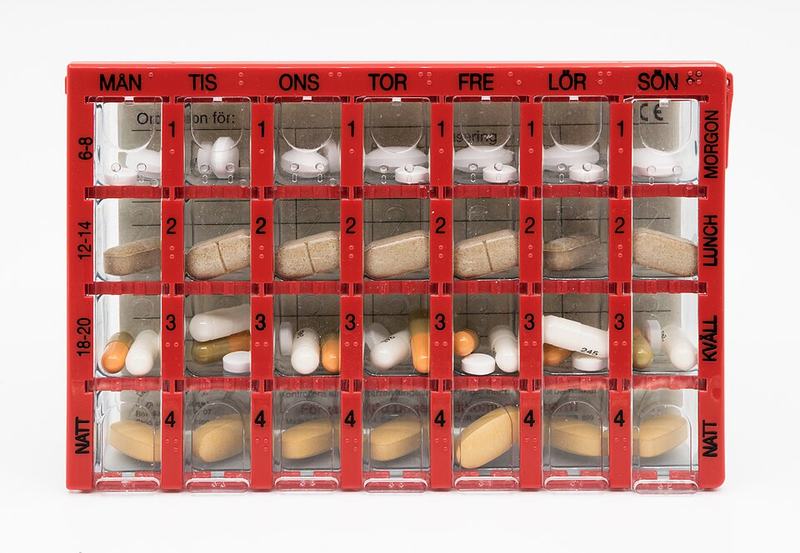
It's common for an older adult with several chronic conditions to end up taking five, eight, or even more different medications, each correctly prescribed on its own. The problem is that, together, that cocktail of medications — known as polypharmacy — can cause interactions and adverse effects that no single medication would cause on its own.
How many medications counts as polypharmacy
There's no universal magic number, but most clinical definitions set the threshold worth paying attention to at five or more simultaneous medications, and refer to 'excessive polypharmacy' from ten upward. These numbers serve as a practical reference for knowing when it's worth explicitly requesting a dedicated review, rather than as a strict rule that applies identically to every case.
Why it's a real risk, not just a theoretical one
The more medications combined, the more likely an unanticipated interaction becomes — and in older adults, the body also metabolizes drugs differently than it used to, which increases sensitivity to these effects. Dizziness, confusion, falls, or even symptoms mistaken for 'cognitive decline' can actually be the effect of a poorly balanced combination of medications.
How kidney and liver function affect drug metabolism
With age, both the kidneys and liver tend to process medications less efficiently than in younger years, which means the same dose can stay active in the body longer than expected, building up if doses are repeated without adjusting for this different physiological reality. This factor, not visible from the outside, is one of the technical reasons a medication well tolerated for years can start causing new adverse effects with nothing apparently having changed, simply because the person's kidney or liver function gradually declined over time.
The prescribing cascade, a pattern that keeps repeating
There's a well-documented phenomenon called a 'prescribing cascade': a medication causes a side effect, that side effect gets interpreted as a new symptom (instead of a reaction to the medication), and a second medication gets prescribed to treat that 'new symptom' — which was actually caused by the first one. This pattern repeats more often than it should when different doctors, without coordinating with each other, keep adding treatments without reviewing the full picture of medications the person is already taking.
Medications with higher risk in older adults
There are international lists, periodically updated by geriatric associations, that identify medications that should generally be avoided or used with special caution in older adults, either because their risk-benefit balance shifts with age or because safer alternatives exist for the same condition — certain long-acting anti-anxiety drugs, some first-generation antihistamines that cause more sedation and confusion at this age, and certain muscle relaxants regularly appear on these kinds of lists. This doesn't mean these medications are banned or should be stopped on your own if already being taken, but that prescribing them to an older adult should be a conscious decision by the doctor, specifically weighing that risk-benefit balance in that particular person's context, rather than an automatic prescription identical to what would be given to a much younger patient with the same symptom.
The pharmacist's role in the review
Beyond the treating doctor, a pharmacist can play a valuable, often underused role in catching interactions: reviewing the full medication list with a specific eye on problematic combinations, doses that might need adjusting for the person's kidney or liver function, and unnecessary duplications (two different medications with the same active ingredient, for example). Consulting a pharmacist specialized in geriatrics, when available, adds an extra layer of safety that complements — not replaces — the medical review.
Supplements and natural products: a common blind spot
Many people don't consider vitamin supplements, medicinal herbs, or 'natural' products as part of their medication, and so don't mention them to the doctor — a mistake that can have real consequences, since several popular supplements interact significantly with prescription drugs (certain blood thinners with certain herbs, for example). Any medication review should explicitly include these products, rather than assuming that 'because they're natural' they carry no interaction risk.
Pill organizers: a simple tool with big impact
Beyond a medical review of the full list, a weekly pill organizer — with compartments separated by day and time of day — significantly reduces dosing errors, both missed doses and accidental duplicates. Filling it with help from a family member or nursing staff at the start of each week, and visually checking at the end of the day whether the right compartments are empty, is a simple way to quickly catch if something was skipped, without relying solely on the person's memory of whether they took each particular medication.
Signs it's worth reviewing medication
- Dizziness, excessive drowsiness, or confusion that appeared after adding a new medication.
- Several different doctors prescribing without knowing the full list of what's already being taken.
- Difficulty keeping up with the dosing schedule (times, amounts) without help.
- New symptoms that could be mistaken for a new illness, but could be a side effect.
What can be done about it
A 'medication review' — bringing the full list of everything being taken to a medical visit specifically dedicated to assessing whether it's all still needed — is a well-supported practice for reducing these risks. This isn't about stopping medication on your own, which can be dangerous, but about having a professional periodically review the whole picture, not just each medication separately.
How to prepare for an effective medication review
For a medication review to be truly useful, it helps to arrive with all the information organized: a complete list with the medication name, dose, timing, and the reason it was prescribed (even if it was years ago and the exact detail isn't clearly remembered anymore), plus any supplements and over-the-counter products used regularly. Many pharmacies and health apps make it easy to generate this kind of list, and keeping it always up to date and on hand — not just for the specific review, but for any new medical visit or an ER trip — is one of the simplest, most effective measures for preventing day-to-day errors from polypharmacy.
With Palermia, nursing staff logs every dose with full traceability, which makes exactly this kind of combined review easier. See how it works.