September 7, 2026
Adapted Physical Exercise for Older Adults: Benefits and Precautions
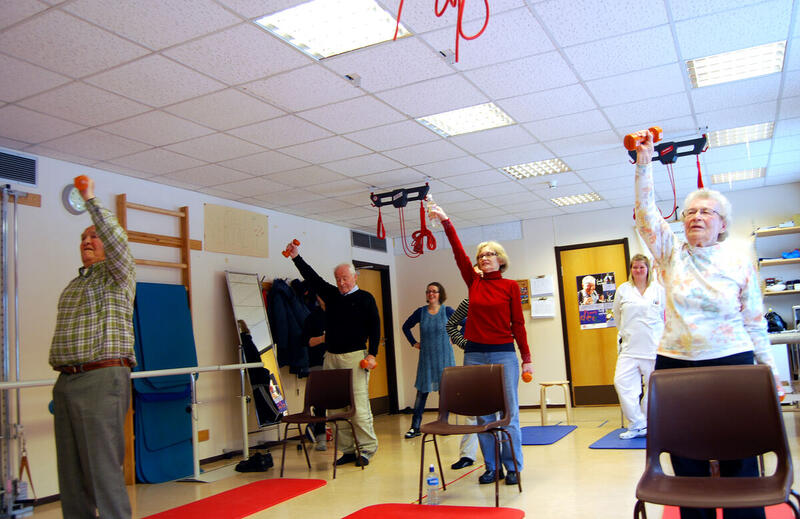
There's a mistaken idea that exercise in older age is unnecessary or even risky. In reality, adapted physical activity is one of the interventions with the most proven benefit at this stage: it improves strength, balance, mood, sleep quality, and reduces fall risk — and it's never too late to start, even at 80 or 90, with the right adaptations.
How much exercise is enough
You don't need to meet standards designed for young adults to get real benefits — even 15 to 20 minutes of moderate daily activity, or the equivalent spread across shorter sessions through the day, already shows measurable improvements in strength, balance, and mood in people starting from a sedentary baseline. What matters is consistency over time, not hitting a specific ideal number from day one, and any amount of movement is better than none — a message especially relevant for people who feel that 'if I can't do a full hour, there's no point starting.'
Recommended types of exercise
- Regular walking, adjusted to each person's pace and ability.
- Strength exercises with resistance bands or light weights, to maintain muscle mass.
- Balance exercises, key to fall prevention.
- Low-impact activities like swimming or a stationary bike, for those with joint pain.
- Gentle stretching, to maintain flexibility and range of motion.
Exercise as part of treatment, not just prevention
Beyond its preventive role, adapted exercise is an active part of treating many chronic conditions common in older age: it improves diabetes management by increasing insulin sensitivity, helps manage hypertension, reduces pain and stiffness in osteoarthritis when the right type of movement is chosen, and eases depressive and anxious symptoms in mild-to-moderate cases comparably to some brief psychological interventions. This means recommending blanket 'rest' for almost any chronic condition, as still happens in some settings out of habit or excess caution, tends to backfire — in the vast majority of cases, adapted, supervised movement is part of the solution, not a risk to avoid, and this view has been steadily gaining ground in current geriatric practice over older, more conservative approaches to rest in old age.
Why muscle strength deserves special attention
Past a certain age, the body progressively loses muscle mass if nothing is done to counteract it — a process known as sarcopenia. This muscle loss is directly linked to higher fall risk, more difficulty getting up from a chair or climbing stairs, and reduced functional independence overall. Strength exercise, even with light loads, is one of the few interventions able to slow or partly reverse this process, which makes it as relevant as cardiovascular exercise, if not more.
Exercise for people with very limited mobility
Even someone with very limited mobility, or who uses a wheelchair, can benefit from adapted exercise: arm movements with resistance bands from a seated position, breathing exercises, or passive and active mobilizations guided by a physical therapist maintain circulation, prevent joint stiffness, and contribute to overall well-being, even when the goal is no longer regaining independent walking. Ruling out exercise entirely in these cases, assuming 'it doesn't make sense anymore,' denies the person real benefits that still exist even at a very reduced level of mobility.
How to start if the person never exercised before
For someone reaching 70 or 80 with no prior exercise habit, starting can bring both excitement and fear. The key is starting with something genuinely simple — walking five or ten minutes around the house, a couple of times a day — and increasing very gradually, celebrating progress even when small. Adding support from a professional (a physical therapist or an instructor specialized in older adults) during the first weeks provides confidence and corrects technique from the start, keeping a rough beginning or an avoidable discomfort from discouraging the person before the habit takes hold.
Adaptations for specific chronic conditions
Every chronic condition calls for its own adjustment within an exercise plan: with knee osteoarthritis, prioritize low-impact exercise like a stationary bike or swimming over running or jumping; with heart failure, respect the exertion limits specifically set by the treating cardiologist; with osteoporosis, avoid sudden spinal flexion movements that raise the risk of a vertebral fracture. A generic exercise plan, without these adaptations specific to each person's condition, can be not just less effective but directly counterproductive in some specific cases.
Precautions to keep in mind
Before starting a new routine, especially with pre-existing heart, respiratory, or joint conditions, a medical evaluation is worthwhile. Progression should be gradual — start small and build up over time — and it's important to watch for warning signs during exercise, like chest pain, intense dizziness, or disproportionate shortness of breath, which call for stopping and seeing a doctor.
The social component amplifies the benefit
Group exercise, beyond the physical benefit, adds motivation and social connection — two factors that greatly increase the chances the activity is sustained over time, instead of being abandoned after a few weeks as often happens with solo routines.
How to sustain motivation long-term
The biggest challenge with exercise at any age isn't starting, but sustaining it for months and years. Setting small, achievable goals instead of unrealistic ambitious ones, keeping some kind of simple progress log (even just noting how many days you walked that week), and celebrating concrete functional improvements — being able to get up from a chair without using your arms, climbing a flight of stairs less out of breath than before — helps maintain motivation once the initial enthusiasm naturally starts to fade. Tying exercise to something enjoyable, like walking in a pleasant park or doing it while listening to music or a favorite radio show, also helps the activity feel less like an obligation and more like an enjoyable part of the day.
This kind of activity is also one of the most effective measures for fall prevention and bone health in older age.