September 2, 2026
Fall Prevention in Older Adults: A Practical Guide
Falls are among the leading causes of injury in older adults, and they often happen right at home, in everyday situations that seemed safe. The good news is that most risk factors are identifiable and, to a large extent, preventable with concrete adjustments, both to the physical environment and to the body's own condition.
Fear of falling, a risk in itself
After a first fall, it's very common for a person to develop a marked fear that it will happen again, which paradoxically raises the risk of a second fall: the fear leads to moving more stiffly and tensely, avoiding activities and outings they used to do normally, and that reduced activity weakens the body further over time. Recognizing this fear as a legitimate reaction, and actively working to rebuild confidence — with small, gradual, initially accompanied steps — matters as much as any physical adjustment to the environment, and sometimes requires support from a professional specifically focused on this psychological dimension of the problem.
The most common risk factors
- Loose rugs, cords on the floor, or poor lighting in hallways and bathrooms.
- Improper footwear, without good support or with a slippery sole.
- Muscle weakness or balance problems that haven't been addressed.
- Medications that can cause dizziness or a drop in blood pressure (see also polypharmacy in older adults).
- Uncorrected or outdated vision problems.
- Getting up too quickly from bed or a chair, causing a temporary drop in blood pressure.
Footwear and clothing: an underrated risk factor
Footwear is one of the easiest risk factors to fix, and also one of the most overlooked. Loose slippers with no back support, socks with no non-slip sole for walking around the house, or shoes with badly worn soles directly raise the risk of slipping. The same goes for clothing: pants or robes that are too long can snag or get stepped on, causing avoidable trips. Reviewing everyday footwear with the same seriousness as reviewing rugs or lighting is a simple step many families overlook.
Why falls cluster at certain times of day
Falls aren't spread evenly through the day — they tend to cluster during nighttime trips to the bathroom (from the combination of darkness, sleepiness, and often urgency), in the first few minutes after getting up from bed or a chair (from the temporary drop in blood pressure that can cause dizziness), and in the bathroom itself, where wet surfaces and the need to bend or turn in a tight space raise the risk. Identifying these higher-risk moments for each specific person makes it possible to focus prevention measures where they'll actually have the most impact, instead of applying the same generic precautions evenly throughout the day.
Concrete adjustments at home
Removing loose rugs or securing them well, installing grab bars in the bathroom, improving lighting (especially on nighttime paths to the bathroom), and clearing hallways of objects are simple changes with real impact. Installing motion-sensor lights on the path from the bedroom to the bathroom specifically reduces the risk of nighttime falls, one of the highest-incidence moments because it combines darkness, sleepiness, and often, urgency.
The role of exercise in prevention
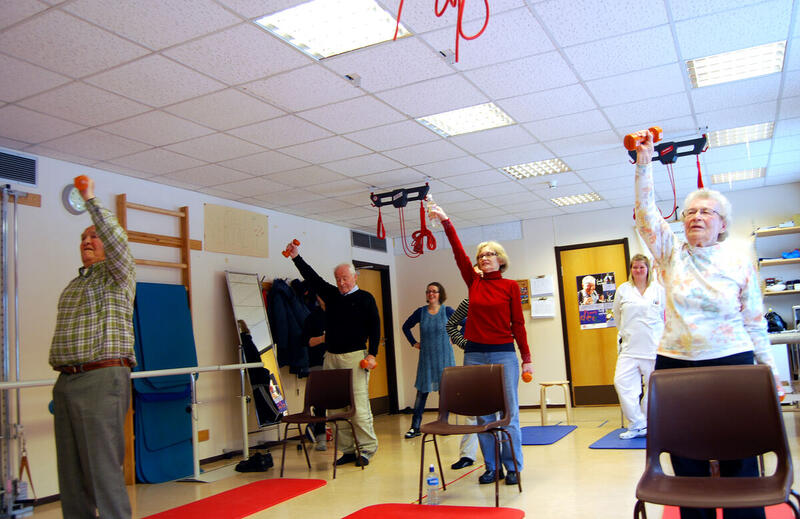
Balance and strength exercise, though it may sound less intuitive as a prevention measure than adjusting the environment, is among the factors with the strongest supporting evidence — strengthening legs and working on balance directly reduces fall risk. Simple exercises like standing on one leg with nearby support, heel-to-toe walking, or repeatedly standing up and sitting down from a chair are accessible to most older adults and can be practiced at home, always with proper supervision at first.
The role of vision and hearing in balance
Balance depends on much more than muscle strength — the visual system and the vestibular system (related to the inner ear) constantly feed the brain information about the body's position in space. Uncorrected vision problems, unoperated cataracts, or inner ear disorders can significantly disrupt balance without the person consciously connecting it to fall risk. An eye exam and, if there's frequent dizziness or a sense of unsteadiness with no clear cause, an ENT evaluation should be part of any serious workup into why an older adult is falling more often than expected.
Assistive technology: alarms and sensors
For people who live alone or have a history of falls, there are assistive devices — portable panic buttons, motion sensors that alert if someone hasn't gotten up by their usual time, bed alarms that flag if the person gets up at night — that don't prevent the fall itself, but drastically cut down the time until someone gets help if it happens. In a care setting with staff continuously present, this risk of 'being down with no one knowing' is naturally reduced, something many families especially value when an older relative lives alone.
How to respond in the moment of a fall
If an older adult falls, the first step isn't to rush to get them up right away — it's better to first ask if they feel pain and where, check for any visible deformity or obvious difficulty moving a limb, and only if everything seems okay, help them up calmly and gradually, first sitting, then standing, checking for dizziness before attempting to walk. Rushing or roughly lifting someone right after a fall, without first checking for a hidden injury, can worsen an unnoticed fracture or cause a second incident from moving too quickly right after the first.
What to do after a fall, even one that seems minor
Every fall in an older adult, even without obvious injury, deserves a medical check — there can be internal injuries not visible at a glance, and a fall is also usually a sign that some risk factor needs attention. Fear of falling again after a first episode can also lead to reduced physical activity, which paradoxically raises future risk by further weakening the body.
Adapted physical exercise is one of the most effective tools for maintaining the balance and strength needed to prevent falls.